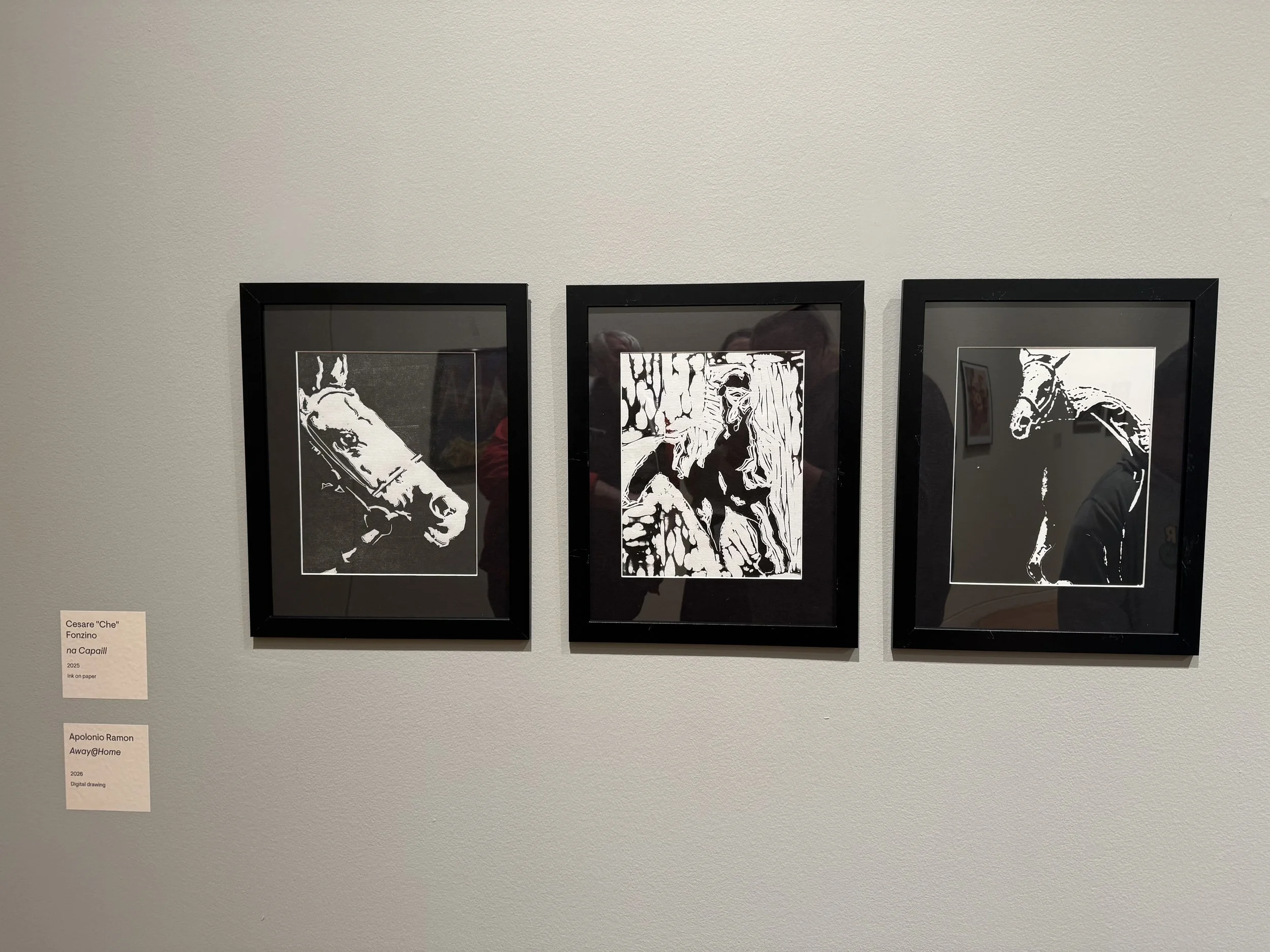
na Capaill (Irish: “The Horses”) is an ongoing series that examines Irishness and diaspora through one of the country’s most storied and famous exports: racehorses.
Every subject of the series is an Irish-born thoroughbred that achieved success abroad, each embodying an aspect of Irish history or culture.
These editions pay homage to the pressures of heritage and circumstance; to the unbreakable human-equine connection; and to being perceived as a member of a particular identity, even when your ties to others in that group are increasingly tenuous.
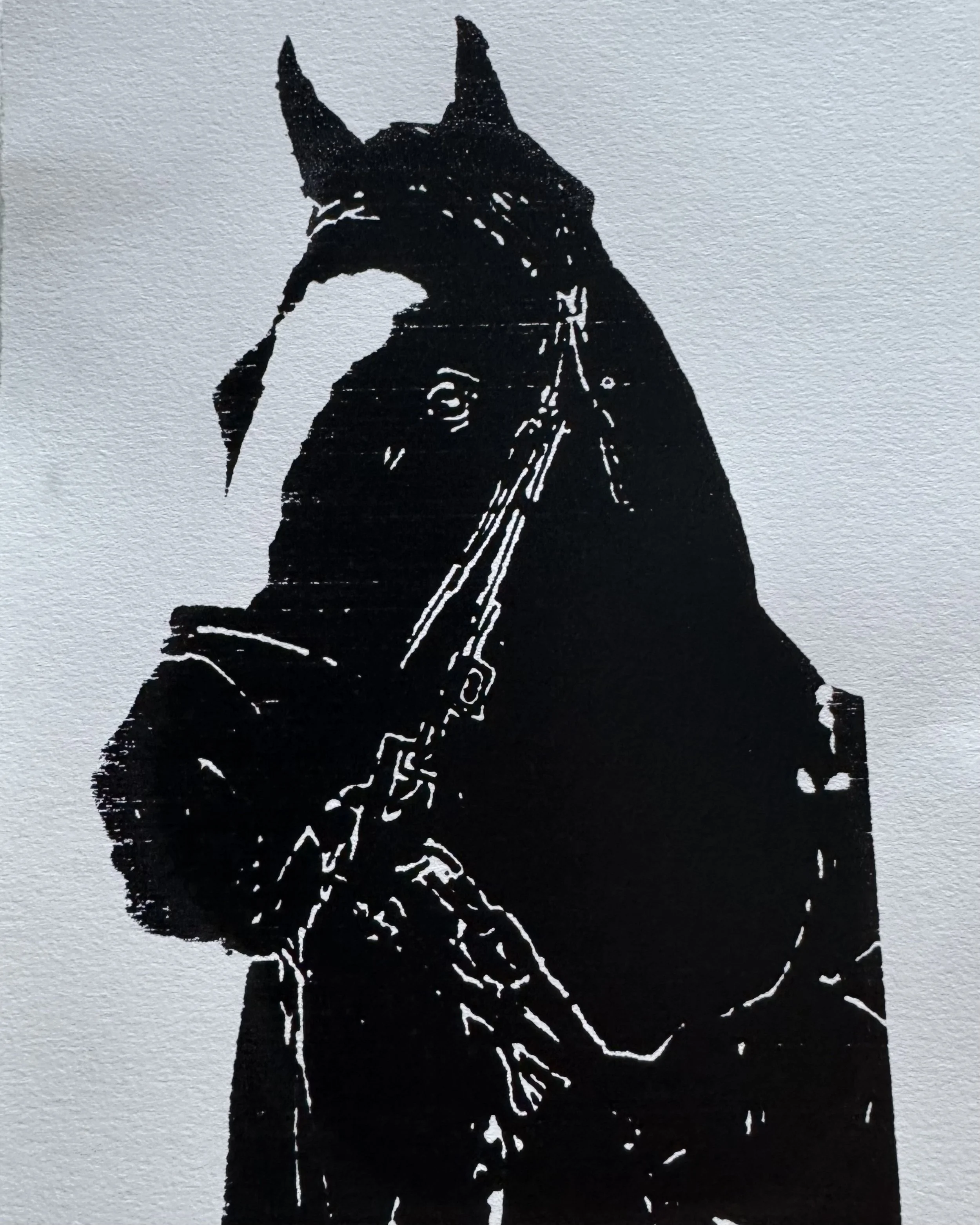
Shergar
Shergar (2025) highlights the horse of the same name that attained significant wins in the UK, having an incredible 3-year-old season. Despite having run for just two years, Shergar holds a 140 Timeform rating, placing him tied seventh all-time by the data firm.
Shergar was retired to stud in 1981 but was stolen away from his farm and held for ransom in February of 1983. He was found dead shortly thereafter, aged just five. Claims that the ransomers were tied to the IRA, seeking finances to continue the guerilla war against occupying British forces in Northern Ireland, further cemented Shergar’s legend.
Shergar represents the transience of health, a common theme in Irish literature and song, as well as the harsh realities of The Troubles and violence on the island.
Here, Shergar is depicted in black and white relief, resting in his paddock pre-race.
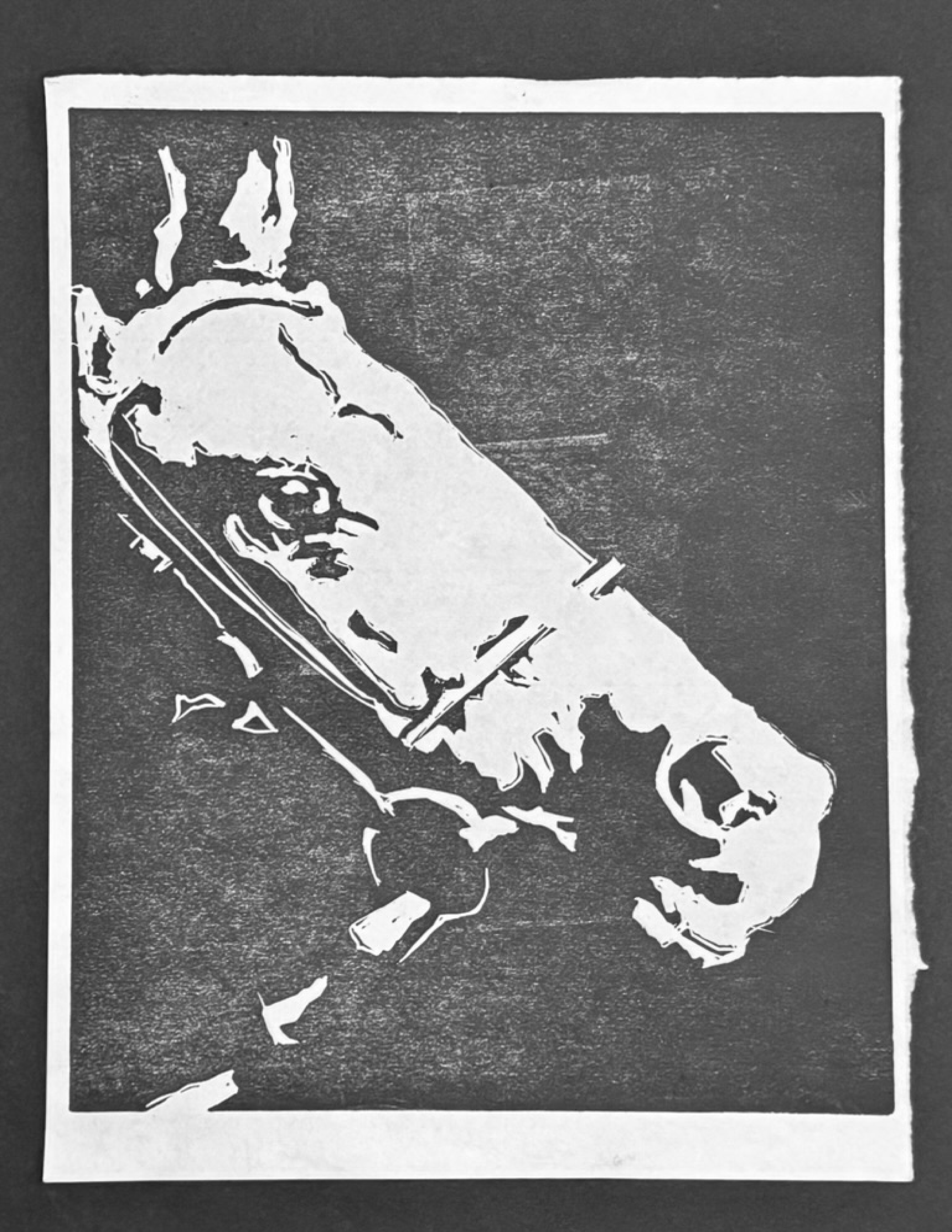
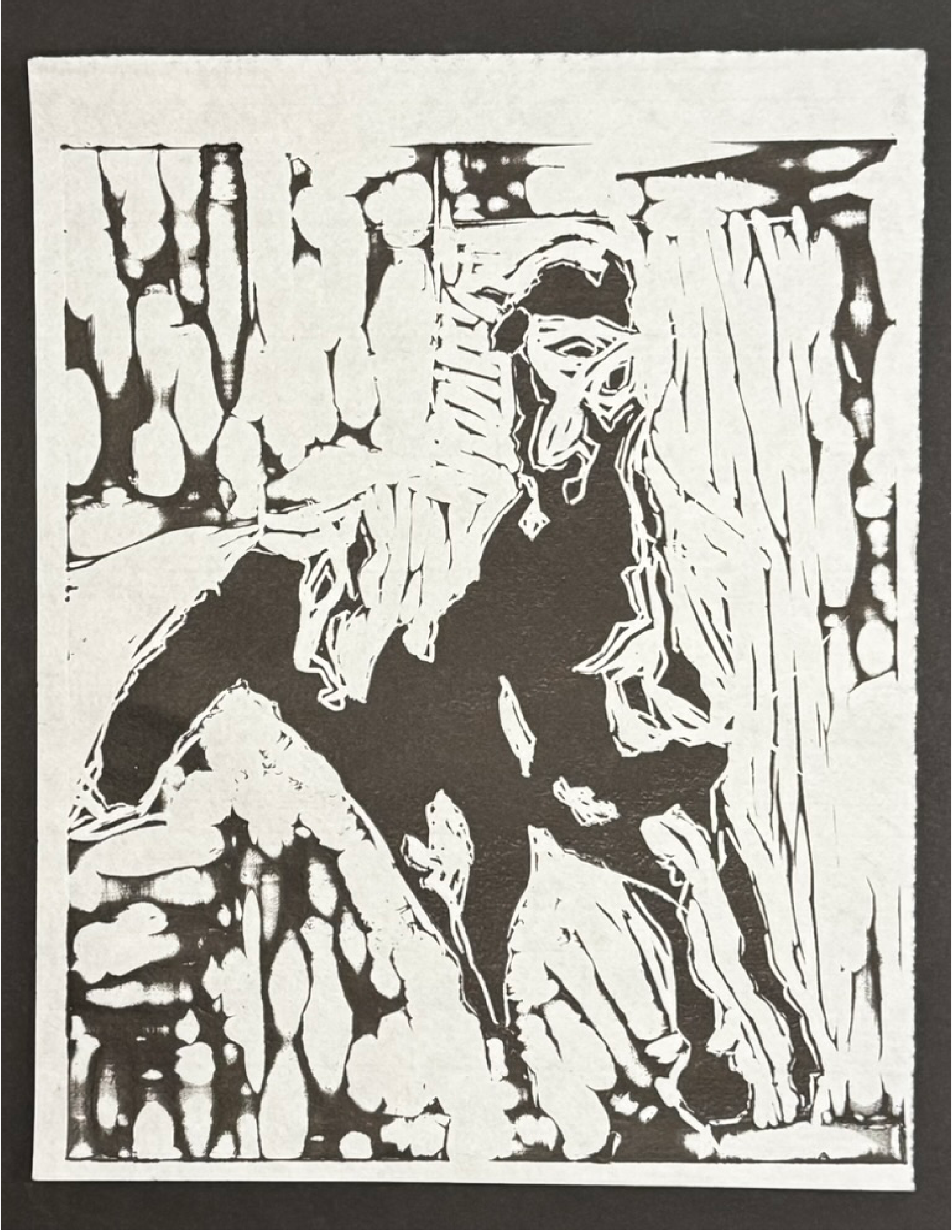
Montjeu
Montjeu (2025) profiles a dominant French-trained, Irish-born horse, having won three of the top 10 ranked Grade 1 races in the world at the time of his running. He was also known as a “destination horse” and spoiler, having defeated top-ranked horses from North America, Europe, and Japan.
In 2001, Montjeu returned to Ireland for stud duties. His progeny include graded winners as far away as Australia, where his bloodline continues to produce winners.
Here, he is portrayed in abstract form, highlighting his shifting identity as Irish and French, while being descended from Northern Dancer, a Canadian-American horse with lines that have dominated worldwide. A late-surging runner, his powerful charge is centered.
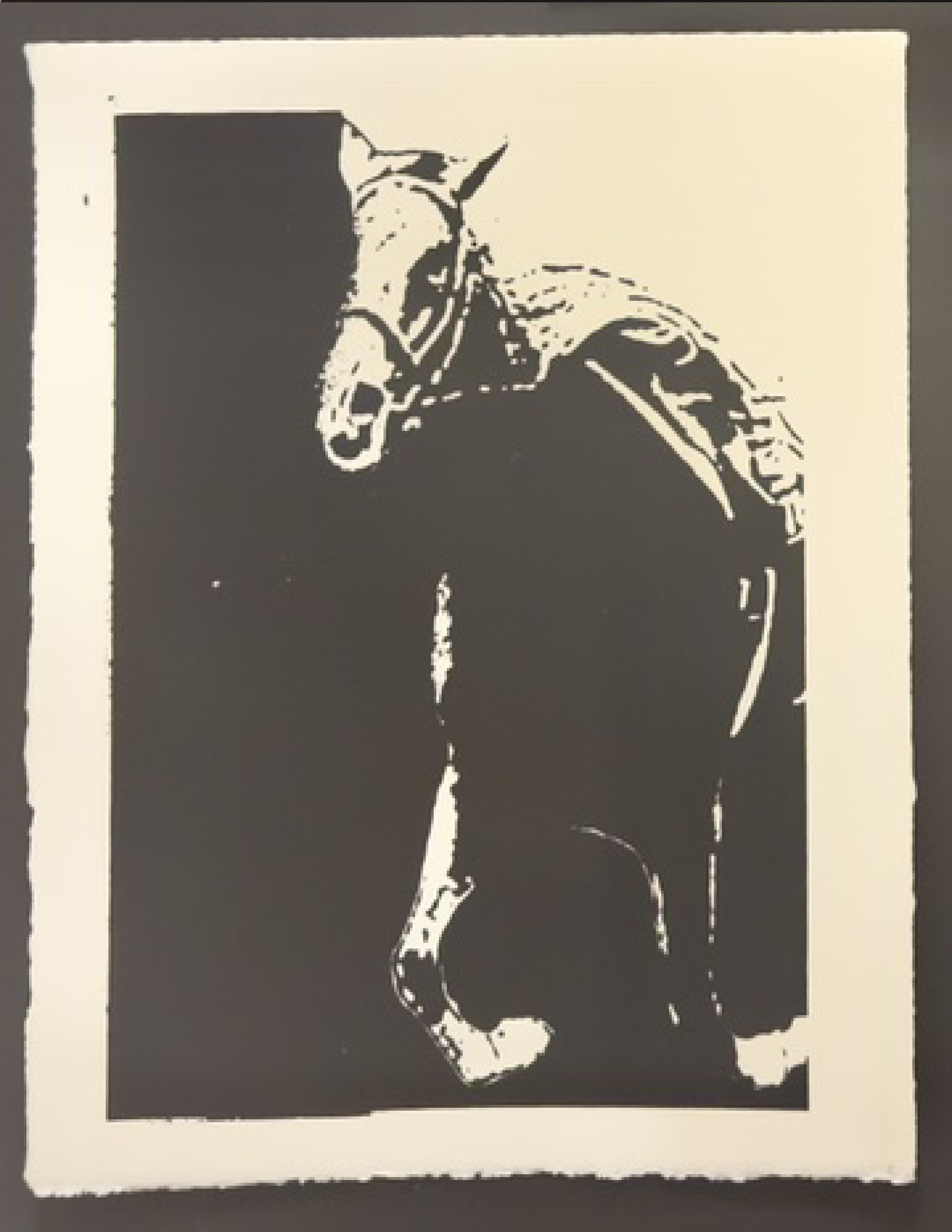
Fine Motion
Fine Motion depicts the Irish-born, Japanese-run mare who went undefeated through her two Grade 1 wins. She was named the top 3-year-old filly by the Japanese Racing Association for her 2002 campaign.
Originally scouted for her potential as a broodmare given her lineage by Danehill and the success of her half-brother by Cocotte, Pilsudski, Fine Motion was found to be a natural chromosomal hermaphrodite post-retirement. She was thus never able to conceive. She lives today as a penion horse at Fushikida Farm, where the owners credit her with helping save the stable from dire straits.
Finemo, as she is lovingly nickenamed in Japan, represents a rare intersex racer, and she is often upheld as an icon for queer equestrians.
Here, Fine Motion is depicted mid-run in her 3-year-old season, a powerful presence in long-mile distances and in the hearts of marginalized fans.

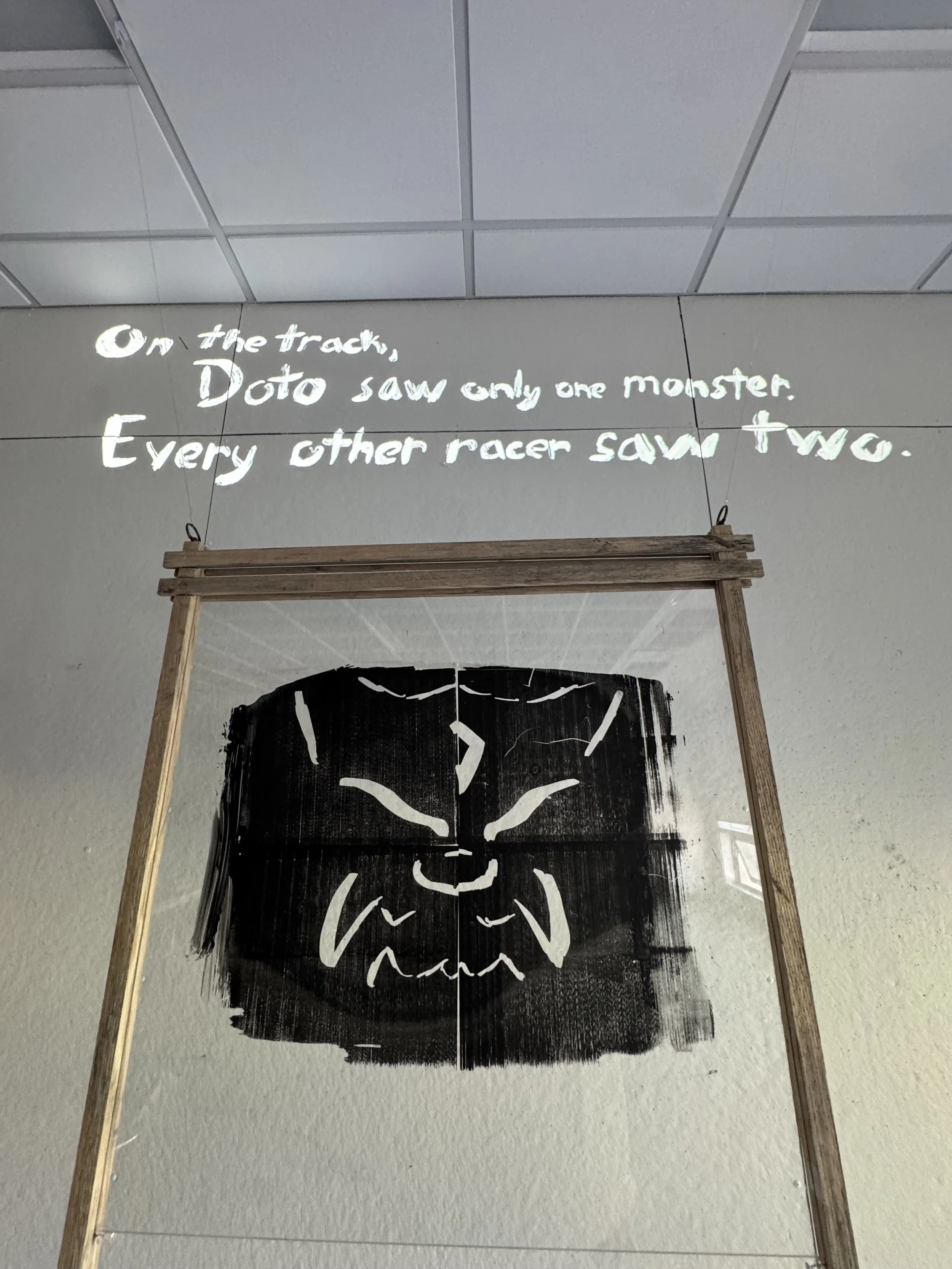
Meisho Doto features three gates aligned in sequence. The wooden gates pull inspiration from three sources: the torii gates found at Tanaka-jinja, a small Shinto shrine dedicated to a horse diety found near Kyoto Racecourse (the last track at which Doto lost to Opera O); the hurdles found in jumping and steeplechasing equestrian sports; and the starting gates found at racetracks. They are held aloft by six metal cables, five silver and one gold, representing Doto’s record against Opera O in G1 races.
The room is filled with the audio from the 2001 Takarazuka Kinen broadcast, furhter immersing the viewer in the feeling of trailing behind Doto and Opera O. Hanging between the farther two gates is a pair of headphones, which, when worn, play only the sounds of a single horse’s ragged breathing and thundering hooves. From where one dons the headphones, you can see only T.M Opera O’s demonic face looming in front of you.
Meisho Doto
Meisho Doto is a multimedia piece chronicling the Irish horse of the same name. Doto famously raced repeatedly against T. M. Opera O, a Japanese horse who went undefeated in 2000 and retired as the highest purse earner ever. Doto placed second to Opera O in five straight Grade 1 races before defeating the “Ruler of the Century’s End” in the 2001 Takarazuka Kinen.
In almost any other time, Doto could have been a dominant horse in his own right. He happened to run alongside one of the strongest Japanese horses to ever take the turf, consigning him to the status of “silver collector” or “also-ran.”
He symbolizes effort, persistence, and consistency. He and his team fought off the bugbear that haunted them, claiming a spot as one of the most quietly powerful Irish horse ever exported.
Today, Meisho Doto is pensioned at Northern Lake Farm. In 2025, fans of Doto raised over $700,000 to help the farm renovate and care for its residents.
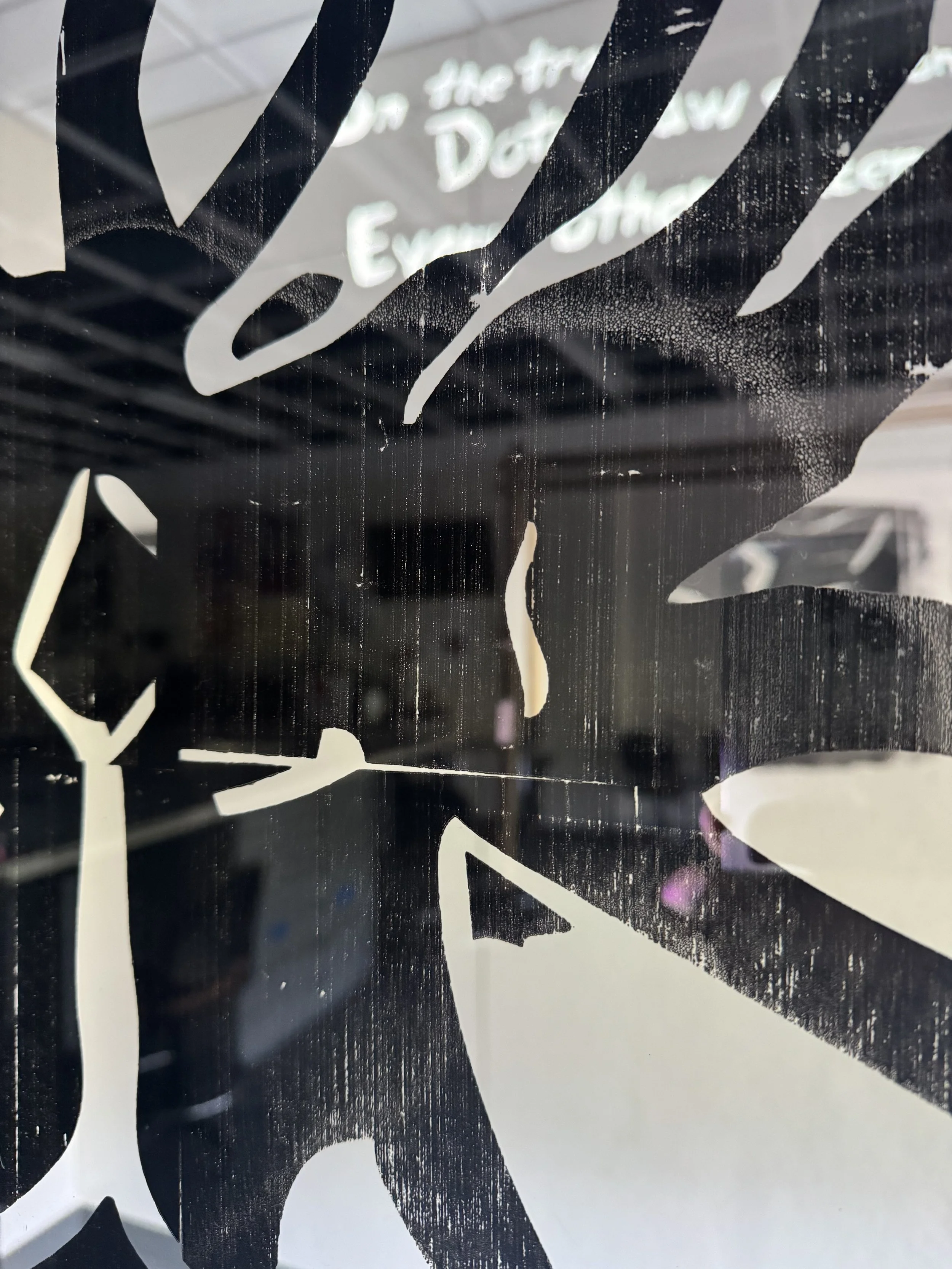
The gates hold screenprinted panels portraying Doto and Opera O. The viewer passes through an open gate, taking on the role of the rest of the field. As the quote projected above the frames reads:
“On the track, Doto saw only one monster. Every other racer saw two.”
Inspired by these words, the panels present Meisho Doto and T.M. Opera O as monstrous creatures of myth from their respective regions of origin.
Doto takes the form of an each-uisce, a Celtic water horse. It lures in unsuspecting passersby, taken by its grace, strength, and beauty, before dorwning them as they are caught in its tack.
T. M. Opera O’s design is based on the oni, an ogre-like, demonic entity found in Japanese folklore. Opera O here takes cues from depictions of Shuten-doji, an oni ruler who menaced residents of Kyoto before his slaying by the legendary hero Minamoto no Raiko.
Prints from na Capaill,
featured in the Cleve Carney Museum of Art 2026 Student Art Exhibition